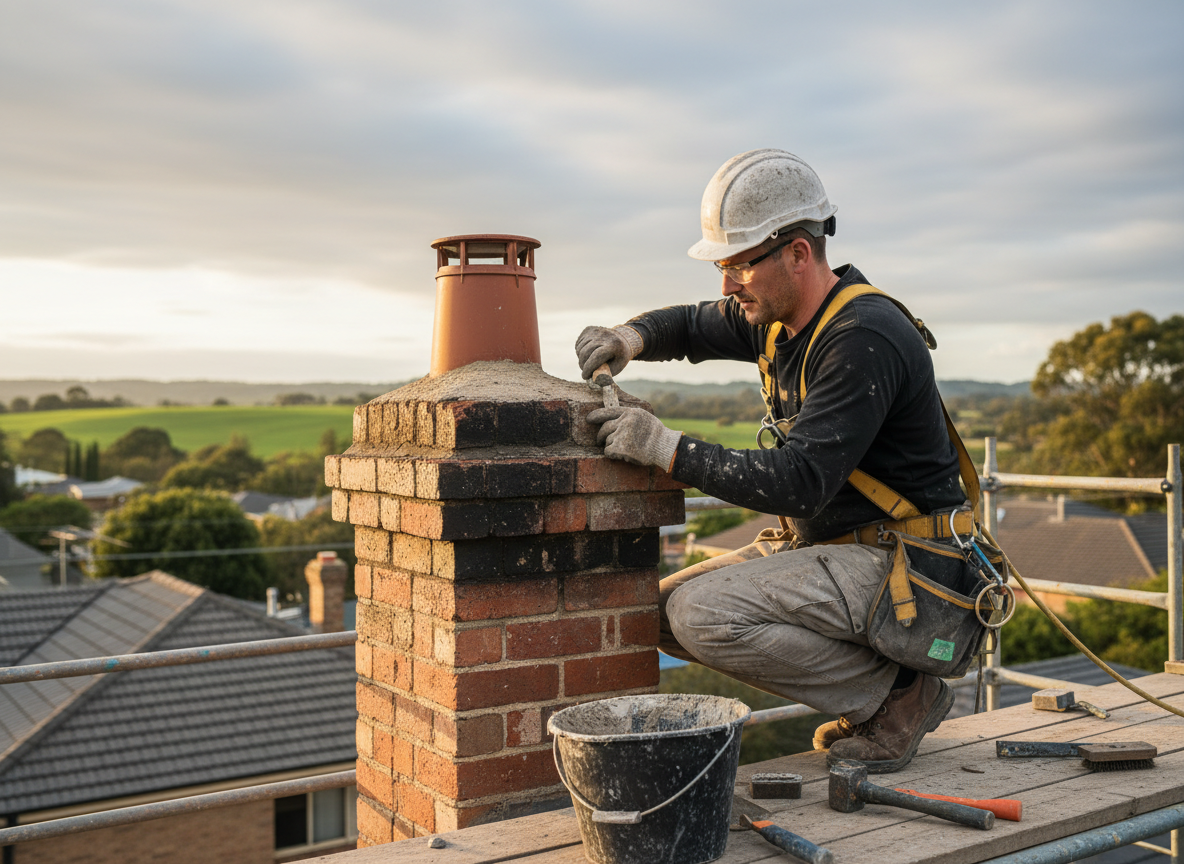
Chimney repair work in Werribee often centres on older brick stacks in Wyndham Vale and Riverbend homes built between the 1970s and 1990s. Warm summers accelerate mortar drying and cracking while winter temperature swings loosen flue liners. Technicians at 114B Watton St regularly see crown failures where water pools on flat tops and freezes overnight, allowing moisture to track down the flue and stain ceilings in living rooms below.
In Tarneit and Hoppers Crossing, newer double-storey homes with metal flue systems present different issues. Heat expansion from wood heaters used during cooler months can separate joints if the original flashing was not fitted with enough clearance to the roof deck. Repair crews check for rust at the roof line and replace damaged sections before water reaches the ceiling space during the next heavy rain.
City of Wyndham properties near Werribee Park and the Open Range Zoo sit on clay soils that shift with seasonal moisture changes. This movement tilts chimneys over time, opening gaps at the roof junction. A proper repair includes re-pointing the stack, installing new lead flashing and ensuring the chimney remains plumb so smoke draws correctly once the heater is lit again.
Homeowners in Werribee South sometimes call after noticing white staining on external brickwork. This efflorescence signals ongoing water entry through damaged caps or missing mortar. Leaving it unaddressed allows salts to break down bricks and eventually forces a full rebuild rather than a targeted repair.
Technician insight
In Werribee the thing that catches most people out with professional chimney repair is clay soil movement in Wyndham Vale and Tarneit. It slowly tilts stacks and opens the flashing joint every winter. Homeowners often patch the roof leak but leave the lean, so the same gap reopens the following season.
Tarneit Double-Storey Flue Separation
Homeowner in Tarneit noticed water stains on the upper bedroom ceiling after heavy rain. Inspection showed the metal flue had separated at the roof penetration due to expansion from heater use. Crew replaced the damaged flue section, fitted new flashing with proper clearance and rebuilt the crown. No further leaks occurred through the next summer and winter cycle.
How it works
- 1
Site Inspection
Technician examines the full height of the chimney from ground level and roof, checking mortar, flashing and liner condition.
- 2
Moisture and Structural Assessment
Moisture meter readings and plumb checks identify hidden water paths and any lean caused by local clay movement.
- 3
Material Repair or Replacement
Damaged bricks, mortar or metal flue sections are replaced using materials suited to Werribee's warm summers and winter temperature swings.
- 4
Flashing and Crown Work
New lead or apron flashing is installed and the crown is rebuilt or sealed to prevent future water entry.
- 5
Final Clearance and Testing
Smoke test confirms proper draw and the work area is left clean before the job is signed off.
Pricing
Upfront quotes provided after inspection at 114B Watton St or on site.